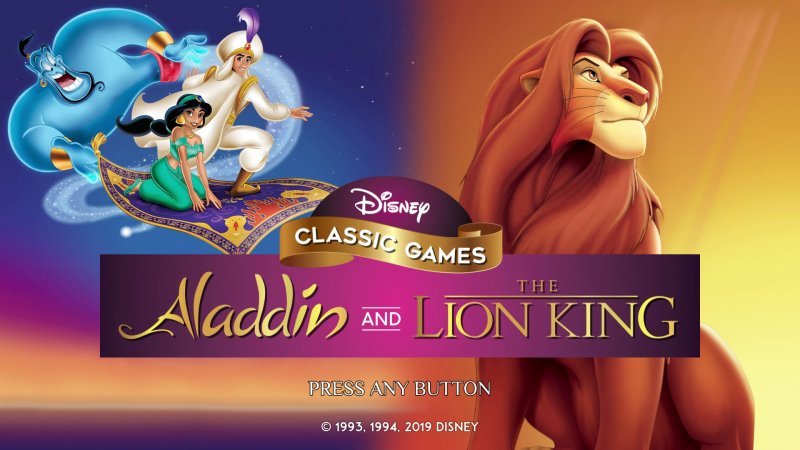
One of the coolest things about the Disney Classic Games: Aladdin and Lion King (and later Jungle Book) video game collection by Digital Eclipse is hidden in the bonus section. Somewhere in there, revealed to the public for the first time, is the Aladdin style guide and press kit sent to merchandisers and anyone else who wanted to do something with the property.
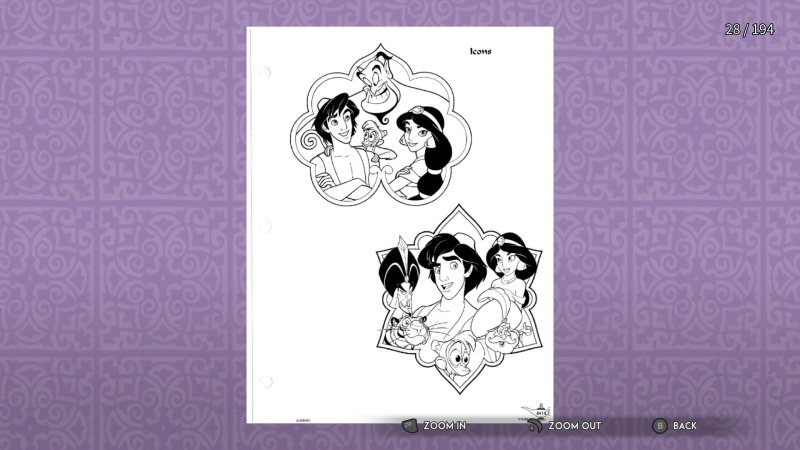
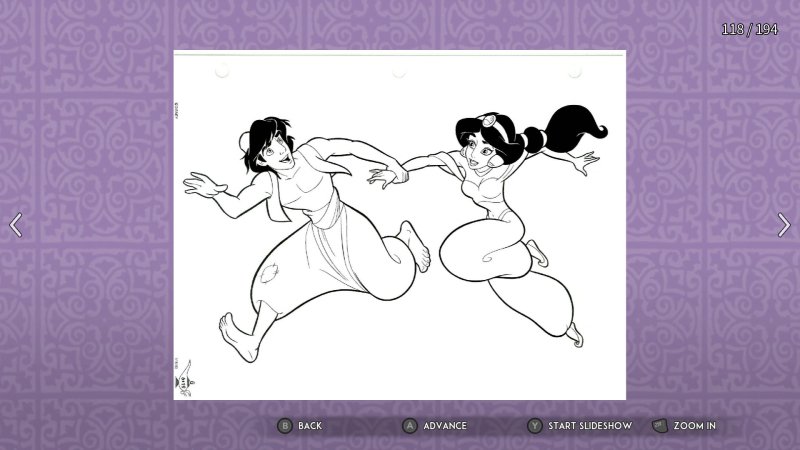
Over 100 illustrations were created by Disney back in 1992 for mass-use in merch, and you can see all of it here. You'll see drawings that were turned into paintings for magazine and video covers. You'll recognize a pose or two from a comic book panel and realize the artist was lazier than you were led to believe.
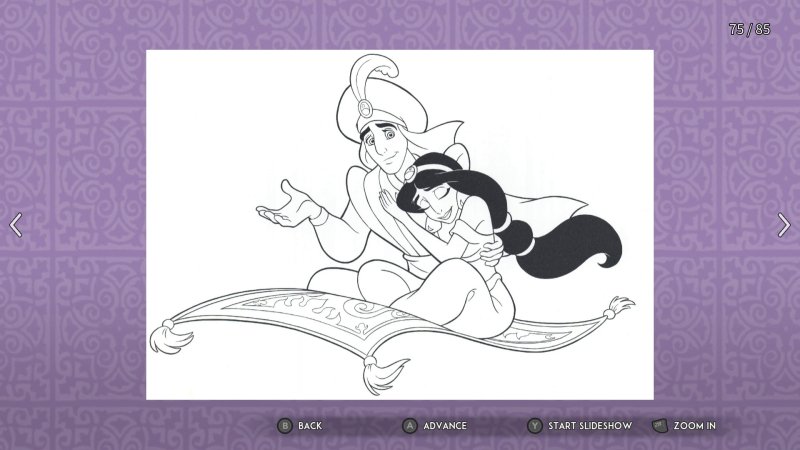
Some of the drawings are rarer than others. I don't remember ever seeing this one on a T-shirt or backpack, and there's probably a good reason for that. Most illustrations that pair Aladdin and Jasmine together have them looking longingly into each other's eyes. This "what can I say, chicks dig me" moment looks kinda gross.
But the style guide also provides guidance on the characters' personalities, and in the process, reveals something about Aladdin that most people were not aware of.
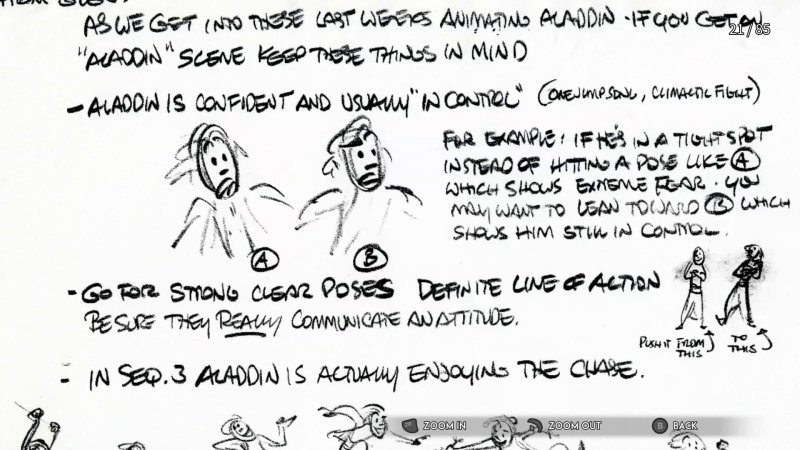
Aladdin was not allowed to show fear. Ever.
It's true. Throughout the original movie, video sequels, TV series, children's books and just about every other piece of expanded universe media, Aladdin was never once depicted as being afraid of something. It was not allowed.

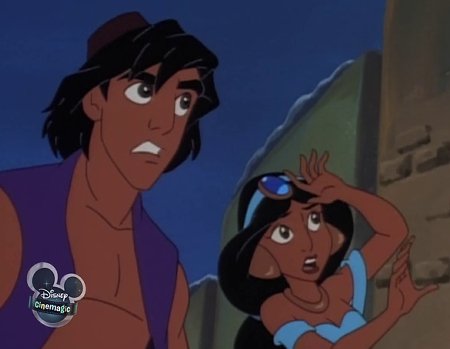
Whenever a dangerous situation occurs, other characters will usually react with fear, but Aladdin will look more angry than anything else. For emphasis, the TV series would often stick him into horrifyng scenarios that would make any reasonable person just a LITTLE worried, but...not this guy. His sense of danger is as nonexistent as his nipples.
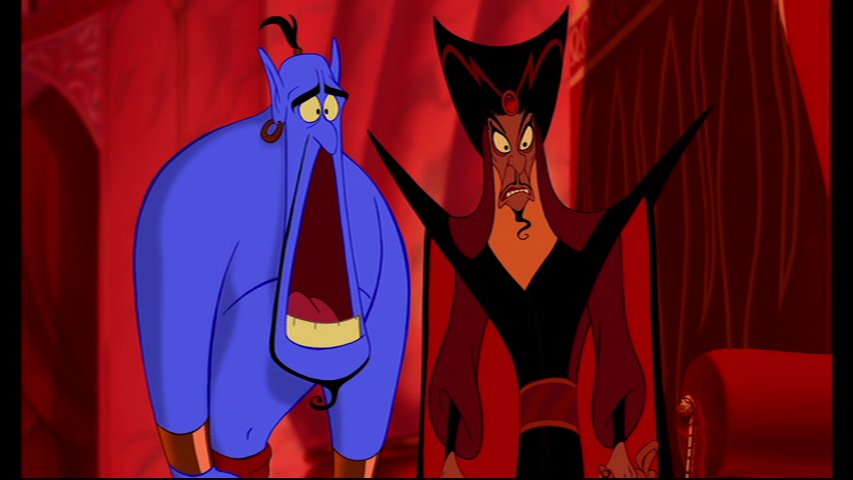
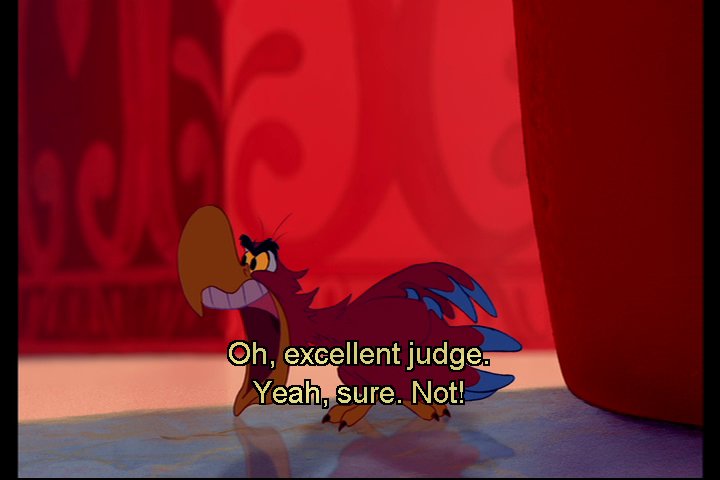
The closest Aladdin could get to afraid was surprised, and so writers had him get surprised a LOT:
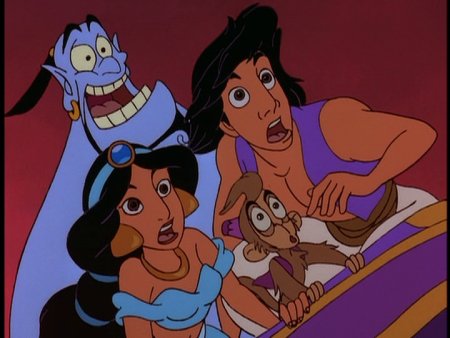
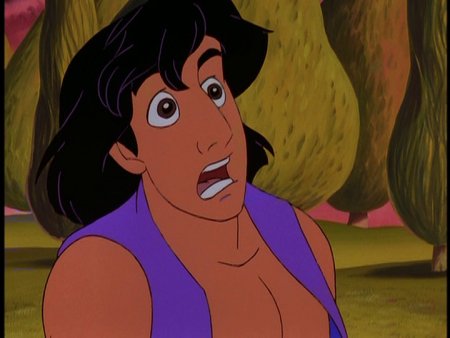
But it was only momentary: his face would snap back and he'd resume being completely fearless, sometimes even mocking the source of danger.
There are only two animated moments where you can actually see a scared Aladdin, and neither count. One is a dream Iago is having where he's the hero and Aladdin is cowering in a corner. The other is the episode The Flawed Couple, which I realize now was an effort by Bill Motz and Bob Roth to break the rules of the writer's bible. Mekanicles and Abis-Mal team up and use "mood stones" to flip-flop the characters' personalities, so not only is Aladdin scared, but Abu is lethargic, Genie is dry and stuffy, and Iago is...in love with Jasmine (he doesn't hate her normally).
But other than those exceptions, Aladdin was never allowed to ever fear anything. Aladdin must not fear, fear is the mind killer.
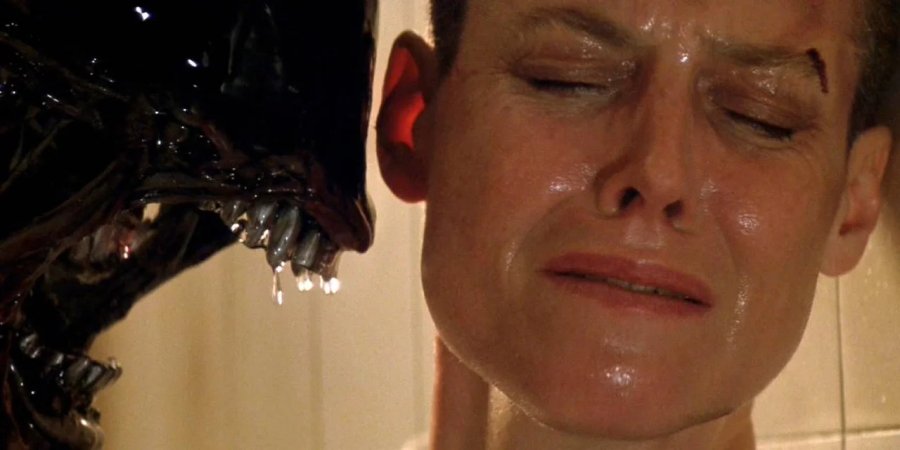
It's true that bravery is admired. But when I think on the history of super tough action heroes in storytelling, I can't think of many of them that were just never afraid EVER. That would make them just kind of flat. How could you keep them relatable and human if you walled off an entire human emotion? What were they thinking? How could Aladdin NOT EVER show fear?
....And how come we didn't really notice this?
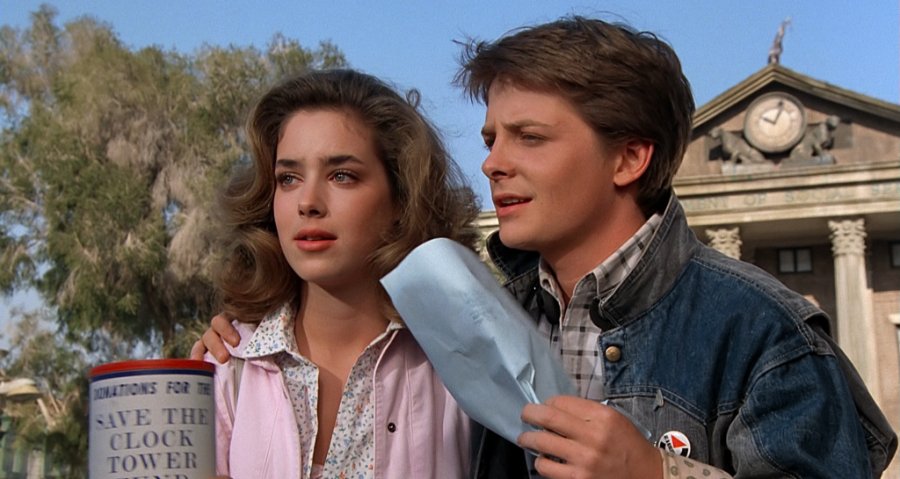
For an answer to the first question -- why no fear -- there's a hint in Aladdin: The Making Of An Animated Film, the book that was released alongside the movie in 1992. Animator Glen Keane is quoted as saying "Originally, we were really patterning him after a Michael J. Fox character. He's the kind of guy that things don't go right for initially, but somehow it turns out okay in the end."
We're going to assume Keane was thinking of Marty McFly and not Alex Keaton. McFly certainly shows fear at times. When he's presented with a tense situation, you can see the panic in his face and hear it in his dialogue. "This is heavy!" However, he gets over it and does what needs to be done, even if that requires rushing in without a plan and making it up as you go. Would that Aladdin somehow be worse than the one we got?
Keane explained further. "I think the problem that Jeffrey [Katzenberg] was starting to have with a Michael J. Fox Aladdin is that Jasmine was so beautiful and so dignified, Jeffrey couldn't see what she saw in Aladdin when we were playing him a little more boyish, a little more klutzy." It's important to point out, Keane means boyish in more than one sense. Disney's Aladdin was originally twelve years old.
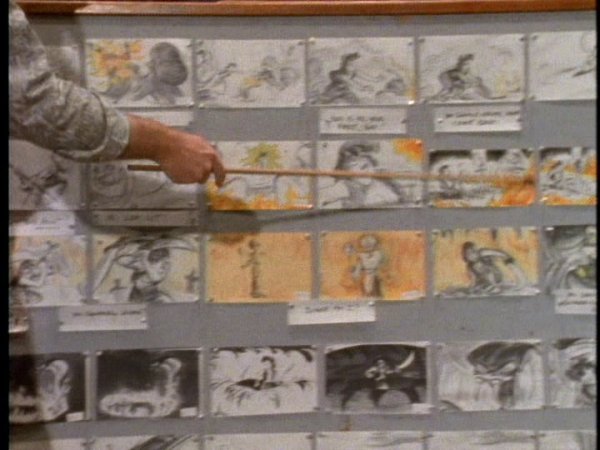
This is related to one of my favorite bits of advice, the scene from the DVD bonus features where Katz is looking at the storyboards for the pubescent Aladdin meeting his love interest and he says "I can see why he likes her, but I can't see why SHE likes HIM." Wiser words were never said. It's important to have a relationship make sense on both ends, or else the audience can't get into it properly.
Keane implies that THIS is the reason why Aladdin can't show fear -- because otherwise the romance wouldn't make sense. But...this doesn't make sense on its own. Plenty of romantic couples in cinema have used male leads who have the ability to get afraid, and it hasn't diminished the believability or the chemistry. I think if I can buy Marty McFly nabbing Jennifer Parker, I can buy a Marty McAladdin nabbing Princess Jasmine.
There has to be more to it than this.
Maybe there's a way to find out what the original Aladdin was like. You know those rough in-progress workprints you see in documentaries? Haven't you ever wished it were possible to see one in its entirety? You'll never believe it, but...workprints for several Disney Renaissance films are somehow out there. I can't give you the details of where or how, but I obtained two workprints of Aladdin. I had to sleet a few throats, but I got eet.
Sad fact: this was TWYVXJ INMUKRPJ's last movie; he died of AIDS shortly after completing half the songs in it.
One workprint is pretty close to the final, while the other (the one we're using) is from the precise point where "Proud Of Your Boy" and "Humiliate The Boy" had been dropped from the musical roster but "One Step Ahead" had not been added yet. This doesn't meant that the gags we saw in that number play out normally; they just don't happen at all. Everything that happens on the street which ISN'T sung is here.
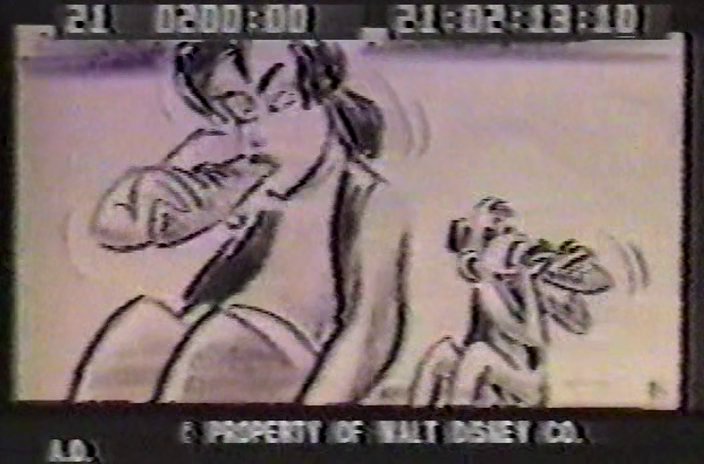
Some differences: instead of giving the stolen bread to some starving kids, Aladdin and Abu never meet them, and they eat the bread...but it's stale. And as they head up to his hovel, they sing a brand new song I've never heard before, "You Can Count On Me." And this is earthshattering: the Peddler who opens the movie ISN'T voiced by Robin Williams, and all his jokes are different. I said in an earlier article that the Peddler was "originally" supposed to be Genie in disguise who would reveal himself at the end. That happens in the second workprint. Looks like it wasn't originally there and was just a brief idea they toyed with.
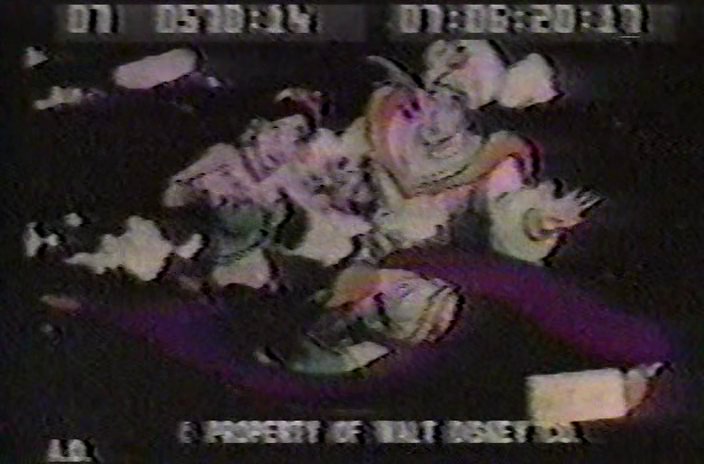
It must be really close to the axing of "Humiliate The Boy" because Jafar's takeover scene doesn't even have dialogue, just a temp narrator explaining the plot beats for the scene. "A Whole New World" is also MIA, but why wouldn't it be...it was a radio pop song that probably hadn't been invented yet. Instead, Aladdin and Jasmine's flight through the clouds is wordless, and scored by instrumental tracks from......An American Tail, I kid you not. Yes, the notes from "Somewhere Out There" can unmistakably be heard. Maybe this is part of why they can't release these workprints; copyright issues would arise.
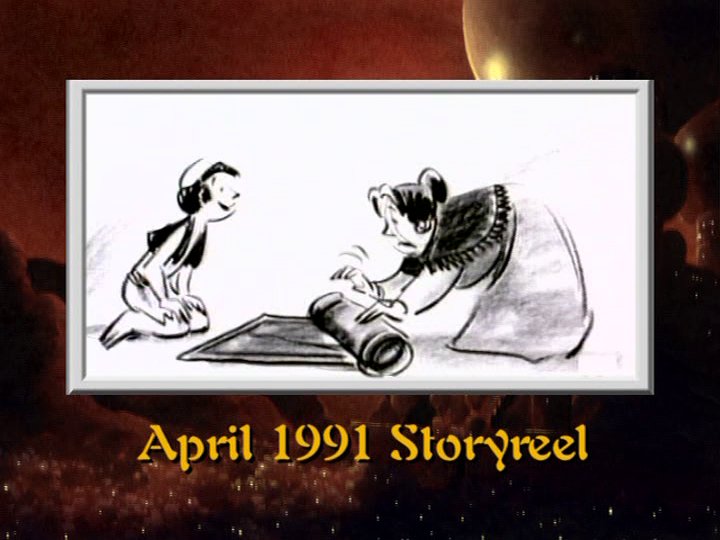
Unfortunately, I can't find what we're looking for. Most of Aladdin's dialogue is close to what he says in the final, and he never becomes Marty McFly-ish at any point. The DVD clips prove there are much earlier cuts than this; some that even have abandoned characters like Aladdin's mother. But they have never gotten out.
The final cut takes inspiration from a different actor. Keane recounts in the book: "Jeffrey said [to] look at Tom Cruise. Look at Top Gun, and see what it is in him, and get that in Aladdin." I guess Maverick never shows fear either.
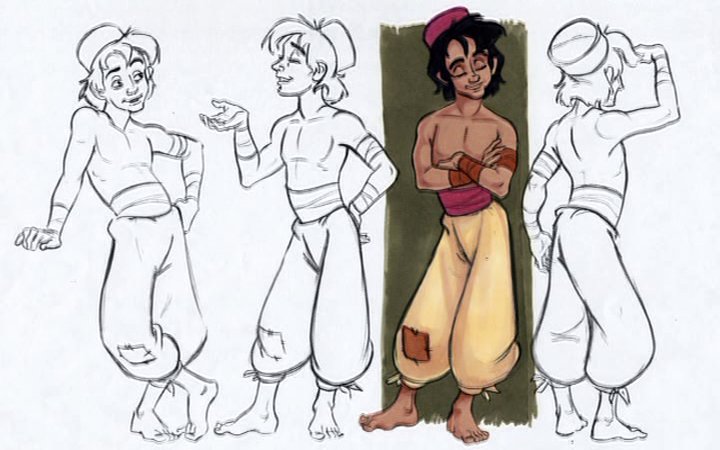
It also appears that the changing of inspiration from MJF to Tom Cruise was also the moment they aged Aladdin up...apparently Fox can be a kid but Cruise can't. If I was expecting McFly to come out of an older Aladdin I had no chance.
If I'd been writing for the TV series, Aladdin having a forbidden emotion would've been an irritating limitation, I'm sure. But there's something else I've picked up on: he was able to get away with it because he had partners to pick up the slack. In every scene when a monster suddenly crashes in out of nowhere, the crew of heroes reacts in varying degrees of intensity: Aladdin gives an "I can take this guy" look, Genie and Jasmine look worried, and Abu and Iago lose their minds and freak out. It is usually the monkey or the bird, or both, that hammer home the danger of a situation, and make up for what the main character can't deliver. And that's why you never noticed this trait of Aladdin's until I pointed it out.
There's no real way to judge whether the original version is worse or not if I can't see it. But as Keane explained, likeability is a tricky thing. "You would be amazed at how easily audiences can stop rooting for a character," he said. "All it takes is somebody drawing a pose where Aladdin is kind of sitting back and just watching...and it's gone." Case in point: that cocky shrug drawing above. People wouldn't like a guy like that appearing on swimwear and pencil toppers. We just have to assume there was just something about the original unreleased, unrevised Aladdin, whatever it was, that rubbed the lamp the wrong way.
....But then again. I gave the bonus features one more watch, and....this jumped out at me.
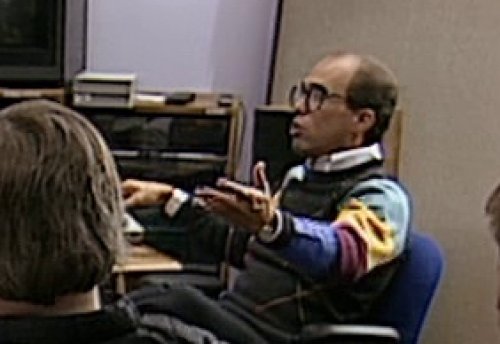
There's a clip where Katzenberg is in another meeting and he's yelling at the story department. "You've given me Michael J. Fox and Julia Roberts! I can't buy that! They don't fit together! Give me Julia Roberts and TOM CRUISE!"
Katz's logic wasn't based on Aladdin's actions or charisma, or lack thereof. His main motivation was actually that Michael J. Fox and Julia Roberts would not work as a couple. And well, no, Julia Roberts probably wouldn't have dated Michael J. Fox -- he'd have to stand on a stepladder to kiss her, for one thing -- but there's a major problem with what he said.
JASMINE WASN'T BASED ON JULIA ROBERTS. She was based on Beth Henn, sister of animator Mark Henn, someone Katz would never know or meet in his life. At no point in development was Jasmine based on Julia, patterned after Julia or inspired by Julia in any way. Katzenberg just walked into the room and assumed it all. I can't verify if the animators could smell booze on his breath, but it wouldn't shock me.
Case cracked! The reason Aladdin can't show fear is....because Jeffrey Katzenberg thought Jasmine was Julia Roberts.